The UN Peacekeeping Mission in Mali: Why Did MINUSMA Fail to Establish Stability?
The UN Peacekeeping Mission in Mali: Why Did MINUSMA Fail to Establish Stability?

The UN Peacekeeping Mission in Mali: Why Did MINUSMA Fail to Establish Stability?
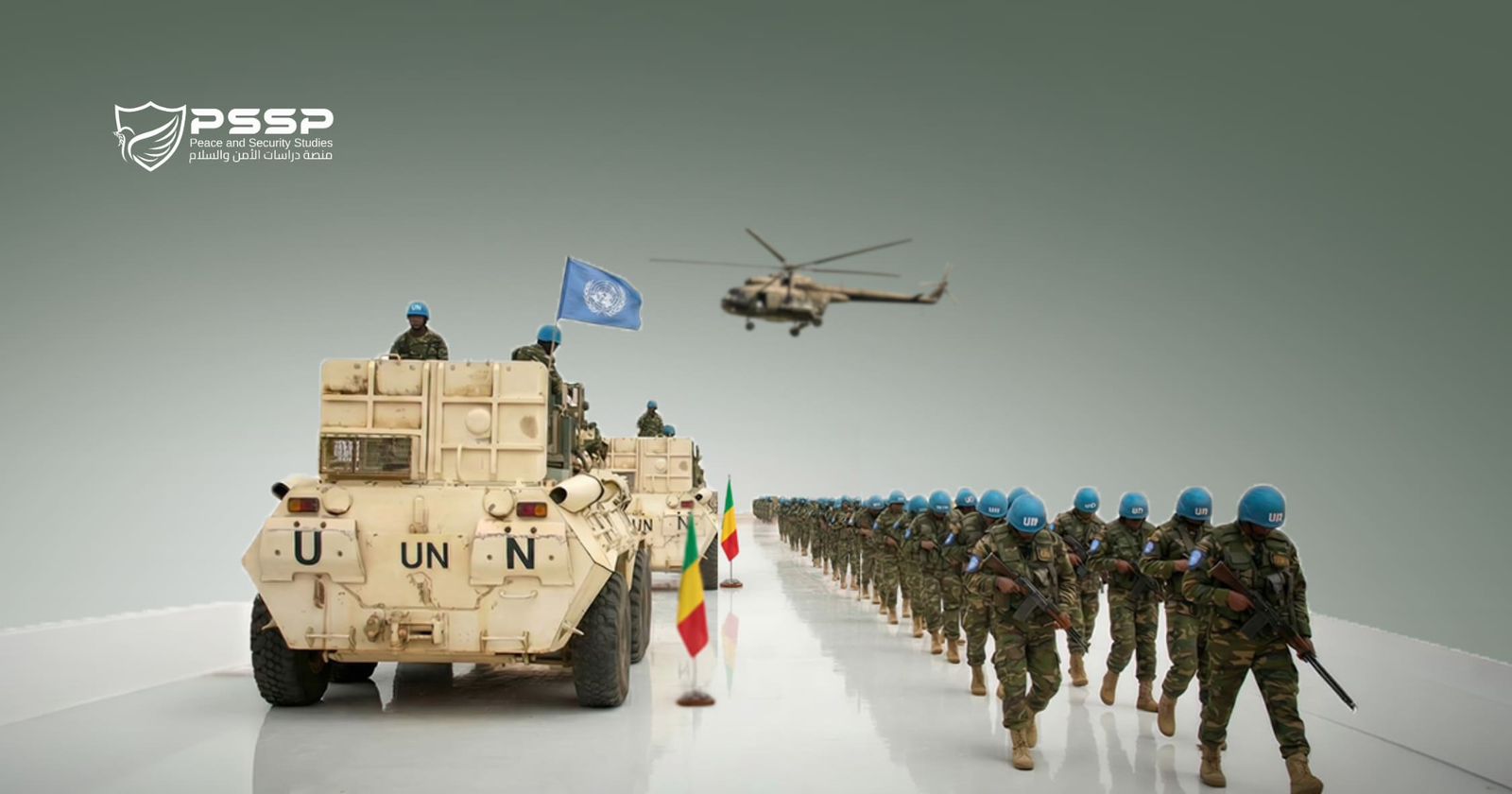
The United Nations Multidimensional Integrated Stabilization Mission in Mali (MINUSMA) was established by Security Council Resolution 2100 in April 2013. Its field deployment officially began in July of the same year, amidst a deep security and institutional crisis that had shaken the Malian state since 2012. This period was marked by the outbreak of armed rebellion, the coup of March 22, 2012, and the expansion of armed terrorist groups over vast parts of the country. At the time, organized international intervention was seen as an urgent necessity by both the international community and Malian authorities. The declared objective was to support the Malian state in restoring stability by protecting civilians, supporting the return of public administration, accompanying the political process and institutional reforms, and facilitating humanitarian action in conflict-affected areas.
MINUSMA’s presence was extensive in terms of resources and deployment. With an annual budget of approximately $1.2 billion and over 15,000 military, police, and civilian personnel from more than fifty countries, it was stationed across nearly 11 main bases in northern and central Mali. Despite these vast resources, the mission’s outcomes remained the subject of intense debate. Over ten years, it failed to achieve lasting stability; instead, the country witnessed continued attacks and an expansion of violence, particularly toward central regions. This ultimately led to a breakdown of trust between Malian authorities and the mission, culminating in Mali’s official request to terminate MINUSMA’s mandate in 2023. This report aims to explain the primary reasons that hindered the mission’s success by analyzing the structural context of the crisis, the limits of the UN mandate, the stalled political process, the local trust crisis, and the geopolitical shifts that reshaped the relationship between Mali and its international partners.
1. A Mission Born from a Deep Structural Crisis
Designed as a Stabilization Operation The Malian crisis is linked to a series of historical imbalances of a political, territorial, and institutional nature. These factors accumulated over many years to produce a fragile environment ripe for explosion at the first major shock. The outbreak of the fifth rebellion in the country’s history on January 17, 2012, marked a decisive turning point. Led by the National Movement for the Liberation of Azawad (MNLA), it utilized a separatist discourse targeting the north, based on old narratives of marginalization and identity. However, the conflict did not remain within separatist bounds; jihadist groups soon entered the scene, including Al-Qaeda in the Islamic Maghreb (AQIM) and the Movement for Oneness and Jihad in West Africa (MUJAO), bringing an ideological project seeking a radical overhaul of the Malian state.
The situation grew more complex following the military coup on March 22, 2012, which dismantled the military chain of command and weakened the state. This allowed armed groups to advance as far as Mopti (central Mali), representing a direct threat to the state’s survival. In response, France intervened militarily via Operation Serval (later Operation Barkhane) at the request of Malian authorities, liberating strategic cities such as Gao and Timbuktu. However, Malian national analyses note a sensitive point: the Malian army was not allowed to enter the city of Kidal, a rebel stronghold, during that period. This reinforced a later perception that territorial sovereignty was being managed according to a selective international logic.
MINUSMA: Massive, Costly, and Highly Vulnerable MINUSMA arrived with significant resources, reflecting the international stakes in Mali’s stability. With a force of over 15,000 and a billion-dollar budget, it became one of the most dangerous UN missions globally. Between 2013 and 2023, the mission suffered approximately 311 fatalities among peacekeepers, with over 180 killed in direct attacks. This high casualty rate highlights the risks faced in a theater characterized by unconventional warfare and extreme armed violence, forcing the mission to operate under constant pressure between its mandate and a rapidly changing reality on the ground.
2. An Ill-Suited Mandate: Peacekeeping vs. Terrorist Warfare
A primary reason for MINUSMA’s limited results was the structural gap between its “peacekeeping” mandate and the reality of an asymmetric terrorist war. MINUSMA was established when the crisis was still partially read as a political and territorial conflict manageable through international accompaniment. However, the security threat evolved into a pattern of terrorism where mobile, trans-border groups became the greatest obstacle to peace. This led Malian authorities and public opinion to view the mandate as disproportionate to the nature of the threat.
A Mission Without an “Order to Fight” MINUSMA was not established as a counter-terrorism force. Although authorized under Chapter VII, the nature of UN peacekeeping operations is governed by rules of engagement that prioritize stabilization and civilian protection over offensive warfare. This created a gap between the population’s expectations—a force capable of deterring terrorists—and what the mission could actually do.
3. The Great Dilemma: Absence of a Strong, Unified State
Mali’s crisis was not merely a security issue; it was a crisis of a state suffering from institutional fragility. MINUSMA faced the reality that the success of any stabilization operation is tied to the existence of a state capable of reclaiming its basic functions.
Fragile Governance and Administrative Vacuum Frequent political instability since 2012 weakened national decision-making. The absence of the state in vast areas of the North and Center created an institutional vacuum exploited by terrorist groups to establish parallel governance, including illegal taxation and controlling local movements. While MINUSMA tried to support the return of the state, its role was limited because it lacked sovereign authority.
4. The 2015 Algiers Agreement: A Stalled Political Pillar
The Agreement for Peace and Reconciliation resulting from the Algiers process in 2015 was intended to provide a political exit from the logic of war. However, it suffered from continuous delays in implementation.
Security Dynamics Outpacing Political Progress The security situation on the ground deteriorated much faster than political mechanisms could respond. A key indicator of this failure was the Disarmament, Demobilization, and Reintegration (DDR) file. While thousands were supposed to be integrated, only a fraction were actually processed, fueling frustration and a perception that the agreement was a theoretical framework clashing with a decaying security context.
5. Deteriorating Local Image and a Crisis of Trust
Public perception in Mali was shaped by daily experiences with fear and insecurity. As attacks continued, the relationship between the mission and the population shifted from hope to skepticism.
High Expectations and Growing Frustration The population questioned how a mission with 15,000 personnel and a $1.2 billion budget could fail to stop the violence. Accusations arose that MINUSMA was “indifferent” or acted merely as an observer. This was compounded by weak institutional communication, which failed to clarify the legal and operational limits of the mission’s mandate to the public.
6. Mali’s Reasons for Terminating the Mission
The decision to request MINUSMA’s withdrawal was based on accumulated grievances:
-
Inappropriate Mandate: The authorities believed the mission was not designed to fight the actual threat (terrorism).
-
A Source of Tension: The government argued the mission had become a factor of complication rather than stabilization.
-
Politicization of Human Rights: Bamako accused international parties of using human rights reports as a political tool to pressure the state.
-
Rise of National Military Capabilities: The authorities presented a vision of “reclaiming the initiative,” relying on the national army to secure the country as a sovereign alternative to international intervention.
Conclusion
The MINUSMA experience demonstrates that peacekeeping missions, regardless of their financial and numerical strength, cannot produce lasting stability if the mandate is ill-suited to the nature of the threat (asymmetric warfare) and if it is not accompanied by a capable state and a viable political project. While MINUSMA’s mandate ended in 2023, the cooperation between Mali and the UN enters a new phase, one that is expected to be more closely linked to national priorities and respect for the state’s sovereignty.