Geopolitical Conflict Over East African Ports: Berbera Port as a Model for Regional and International Competition
Geopolitical Conflict Over East African Ports: Berbera Port as a Model for Regional and International Competition

Geopolitical Conflict Over East African Ports: Berbera Port as a Model for Regional and International Competition
Introduction
The conflict over ports in the East African region is one of the most prominent manifestations of local, regional, and international competition. This region is witnessing accelerated mobility by various powers seeking to control strategic locations that will enhance their economic and political influence. This importance stems from the geographical position of East African ports overlooking the Indian Ocean and the Gulf of Aden, making them vital transit points for international trade, especially with the development of maritime transport lines connecting Asia to Europe.
In this context, Somali ports—particularly Berbera Port—stand out as a model for the conflict of interests between different parties attempting to utilize these locations to achieve economic and security gains.
East African Ports Between International and Regional Rivalry
The East African region hosts vital ports in Somalia, Djibouti, Tanzania, and Kenya, as well as smaller ports in Sudan and Eritrea. These ports have become the focus of attention for numerous parties, including regional powers like Ethiopia and Kenya, Arab countries such as the UAE, Saudi Arabia, and Qatar, and international powers like China and the USA. Each party has its own objectives, ranging from purely commercial interests—such as securing import and export routes—to political and security interests, including increasing military influence and combating piracy.
Because of their close ties to maritime trade and cargo transport, these ports play a major role in regional competition. They constitute vital outlets for landlocked countries, such as Ethiopia, which relies heavily on regional ports in Somalia and Djibouti to reach global markets. Consequently, the competition for influence over these ports between Ethiopia and other regional countries is escalating, reflected in direct or indirect interventions aimed at securing strategic interests.
The UAE and Berbera Port: A Model for Commercial Influence Strategy
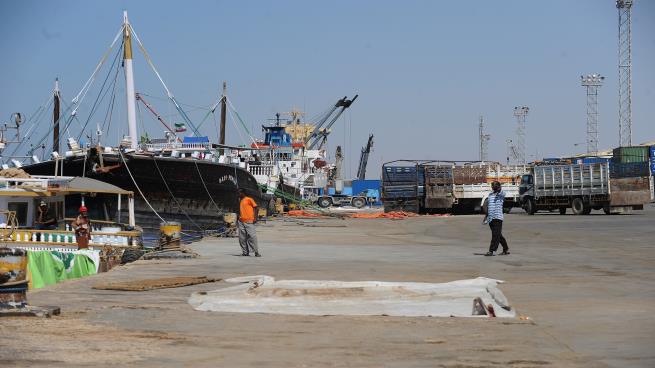
The United Arab Emirates (UAE) is at the forefront of powers seeking to increase influence in East Africa through investments in ports and infrastructure. The UAE aims to control a series of ports in the region to enhance its capacity to control international trade routes passing through the Red Sea and the Gulf of Aden. Berbera Port in Somaliland represents a clear model of this strategy, following the agreement signed between DP World and the local government to develop and operate the port.
This investment is part of the UAE’s vision to increase its commercial and economic influence in the region and counter competition from other powers like Qatar and China. Berbera Port is of great importance due to its strategic location overlooking the Gulf of Aden, making it a potential alternative to the Port of Djibouti, which Ethiopia heavily relies upon. Ethiopia aspires to strengthen its relations with Somaliland to use Berbera Port as a new outlet for its exports, especially following political tensions with Djibouti.
Dimensions of Conflict: Military Presence and Security Threats
The international competition over these ports also carries security and military dimensions. The USA, which maintains a military base in Djibouti, aims to ensure the continuity of its influence in the Horn of Africa, where terrorist organizations like Al-Shabaab operate. Conversely, China is strengthening its presence through massive investments in infrastructure, including ports, establishing itself as a major player in the region.
In recent years, there has been significant Chinese activity toward establishing a network of ports contributing to the Belt and Road Initiative, a strategic project aimed at connecting China to global markets. Meanwhile, Qatar is involved in the struggle for influence over ports by offering financial aid and investments to some East African countries, primarily Somalia.
Through these investments, Qatar aims to strengthen its regional alliances against the influence of the UAE and Saudi Arabia, which escalates political tensions in the region. These tensions sometimes affect the stability of local situations in the relevant countries, as competing parties intervene to support specific political or military groups.
Developing Berbera Port: A Key to Many Disputes
The development of Berbera Port has sparked disputes between Djibouti and Somaliland, as Djibouti fears this development could threaten its role as the region’s primary trade hub. Additionally, the UAE’s support for Somaliland has angered the central government in Mogadishu, which views Somaliland as an integral part of Somalia.
Berbera Port stands as a vivid example of the complexity of conflict in East Africa, where economic, political, and security interests are intertwined. What was once a local port is now at the center of a rivalry between regional and international powers. This conflict embodies the challenges African countries face as they try to benefit from their strategic resources without becoming a battleground for foreign powers.
Ethiopia’s Role in Port Competition
At the regional level, Ethiopia plays a pivotal role in the competition over ports as a landlocked country essentially dependent on foreign ports for its external trade. After years of near-total dependence on the Port of Djibouti, Ethiopia is seeking to diversify its options by strengthening cooperation with Somaliland to secure the use of Berbera Port.
This direction could reduce Ethiopia’s dependence on Djibouti, creating sensitivities in the relations between the two countries. Simultaneously, Kenya views the development of its ports, such as the Lamu Port, as a strategic necessity to surpass regional rivals and create new corridors connecting East Africa to global markets.
China and the USA: A Soft Conflict Over Maritime Influence
China adopts a “soft power” policy by offering massive infrastructure investments involving the construction and development of ports, railways, and logistics complexes. These investments are part of the “Belt and Road” project, aimed at facilitating Chinese access to international markets and securing stable supply routes.
In response, the USA is working to strengthen its military and diplomatic presence in the region to maintain its influence in the shadow of increasing Chinese and Russian influence. This rivalry is clearly visible in Djibouti, where both China and the USA have military bases in close proximity.
UAE and Qatar: Open Gulf Conflict in Somalia
Qatar finds itself in a race with the UAE regarding political and economic influence in Somalia, which creates political polarization within the Somali state and leads to increased foreign intervention. The strategic importance of Berbera Port goes beyond being an economic outlet; its location in the Somaliland region gives it a complex political dimension.
Somaliland, which unilaterally declared independence from Somalia in 1991, lacks full international recognition, yet its geographical location gives it the opportunity to present itself as an independent partner. UAE support for Somaliland occurs within the framework of strengthening alliances in areas experiencing political vacuums or internal conflict, drawing a reaction from the central government in Mogadishu, which views these investments as illegal interference in internal affairs.
Success Opportunities and Economic Challenges
The conflict over ports in East Africa is not limited to the economic dimension but also manifests in security dimensions. The region witnesses intensive activity by armed groups like Al-Shabaab, which threaten internal stability and maritime transport. Consequently, regional countries are forced to strengthen security cooperation with international powers to protect their ports and trade lines. This security cooperation also carries political dimensions, as some countries use these arrangements to bolster their legitimacy or send messages to rivals.
Conclusion
In conclusion, competition over ports in East Africa reflects complex dynamics where economic, political, and security factors are intertwined. Berbera Port forms a living model of this multi-dimensional competition, embodying the conflict between locked regional and international interests. As this competition continues, the greatest challenge for regional countries remains balancing foreign investment with maintaining political decision-making independence.
In light of this shifting landscape, African countries must develop smart strategies to enhance their economic development without becoming hostages to foreign interests.