Sudan and the African Union: When Will the Suspension of Membership End?
Sudan and the African Union: When Will the Suspension of Membership End?

Sudan and the African Union… When Will the Suspension Saga End?
The 48th Ordinary Session of the African Union (AU) Executive Council convened on February 11 and 12, 2026, concluding its work with the Assembly of Heads of State and Government on February 14 and 15, amid special attention to the Sudan file and the future of its membership in the continental organization. Egyptian Foreign Minister Badr Abdelatty acknowledged that full consensus had not been reached within the AU Peace and Security Council (PSC) regarding the termination of Sudan’s membership suspension. This is despite the intensive diplomatic efforts led by Cairo, which holds the Council’s presidency for February 2026, to push toward restoring Khartoum to its continental seat.
The Egyptian minister emphasized that his country is working vigorously to convince member states of the necessity of ending the suspension of Sudan’s membership, considering that the continuation of the freeze is inconsistent with Sudan’s historical status as a founding state of the Organization of African Unity, and subsequently the African Union. He also stressed the importance of dealing with the existing governing institutions, represented by the Sovereignty Council and the Transitional Government headed by Dr. Kamil Idris, as a political reality that requires engagement and interaction. In this context, Abdelatty revealed practical Egyptian initiatives, including inviting the Sudanese Foreign Minister to participate in an informal session of the AU PSC to listen to the Sudanese government’s vision regarding the crisis developments, alongside arranging a visit by a PSC delegation to Sudan. This step aims to assess the situation on the ground and bolster the recognition of the existing institutions’ legitimacy.
Despite these moves, the Egyptian minister acknowledged the existence of discrepancies within the Council, as the consensus required to lift the freeze has not been achieved. This reflects the continuing division within the AU regarding how to handle the Sudanese crisis and its political and security complexities. At the same time, he stressed the need to support any efforts leading to a ceasefire, the protection of civilians, and the launch of an inclusive political process without external interference, in a manner that enhances Sudan’s stability and preserves its sovereignty and unity.
Suspension of Membership: Legal and Political Background
The African Union bases its decisions regarding the suspension of member states on a legal framework aimed at protecting the constitutional order and preventing the seizure of power by illegitimate means. Article 30 of the AU Constitutive Act, alongside the 2000 Lomé Declaration and the African Charter on Democracy, Elections and Governance, stipulates the suspension of any state that undergoes an unconstitutional change of government. The concept of an unconstitutional change encompasses several scenarios, most notably military coups against democratically elected governments, interventions by armed groups or mercenaries to overthrow governments, refusal to relinquish power following free elections, or constitutional amendments that contradict the principles of the peaceful alternation of power. The Charter also grants the AU PSC the authority to suspend the concerned state immediately upon the occurrence of such events, while continuing diplomatic efforts to restore the constitutional order.
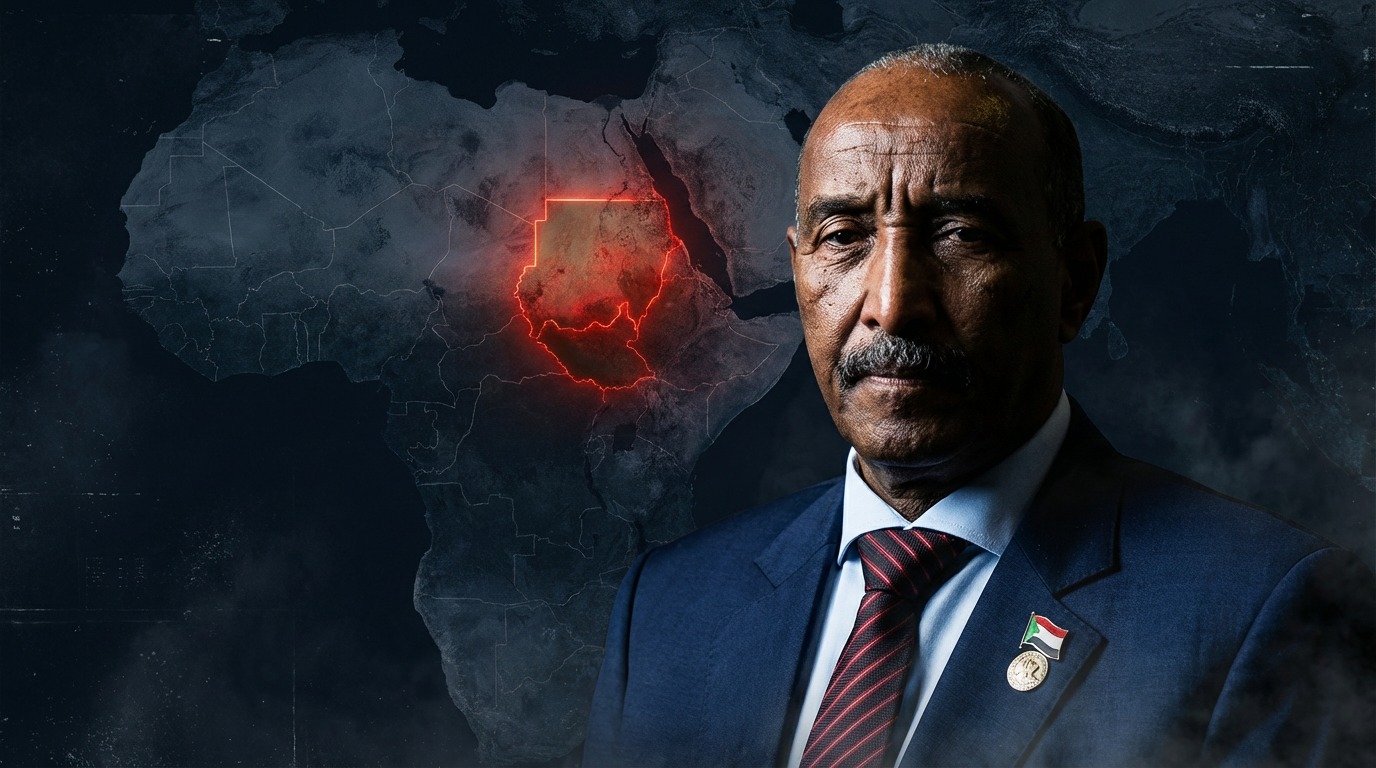
Sudan’s membership was suspended in October 2021, following the decisions taken by the Army Commander and Chairman of the Transitional Sovereignty Council, Lieutenant General Abdel Fattah al-Burhan, which included dissolving the transitional government and declaring a state of emergency—actions the AU deemed an unconstitutional change of power. Since that date, Sudan has remained outside the AU’s institutions, despite its continued commitment to its legal and human rights obligations toward the organization.
Conversely, the African Charter on Democracy stipulates that the suspension can be lifted immediately after the resolution of the situation that led to it, whereupon the PSC recommends to the AU Assembly that the concerned state be reinstated to full membership. However, this condition has remained a subject of debate in the Sudanese case, especially given the ongoing armed conflict and the complexities of the political scene, despite the formation of a civilian government headed by Dr. Kamil Idris—a move Khartoum views as a step toward restoring the institutional order.
The Charter also emphasizes the importance of building strong democratic institutions, reinforcing the rule of law, developing the political system, and organizing free elections. The AU views these conditions as key indicators of a completed political transition. Thus, the issue of lifting the suspension is not merely tied to the existence of a civilian government, but also to the stability of the political system and its capacity to manage a sustainable democratic transition.
The African Union Peace and Security Council: Role and Function
The AU Peace and Security Council is one of the most vital organs of the African Union, established in 2003 with the objective of promoting peace and stability on the continent, as well as preventing, managing, and resolving conflicts. The Council consists of 15 member states, elected based on criteria that ensure regional balance and the capacity to contribute to peacekeeping efforts. The Council’s mandate includes shaping collective security policies, promoting good governance, supporting democracy, combating terrorism, and contributing to post-conflict reconstruction. The Council also possesses the authority to make binding decisions, including imposing sanctions or suspending member states experiencing unconstitutional changes.
In the Sudanese case, the Council has played a pivotal role since the outbreak of the political crisis in 2021, when it took the decision to suspend membership. It has continued to monitor political and security developments and issues periodic statements defining the AU’s stance on the crisis.
Egypt’s current presidency of the Council comes at a crucial moment. Cairo, in coordination with African and Arab countries, seeks to return Sudan to its position within the AU, driven by a vision that its continued isolation may yield counterproductive results and limit the AU’s ability to positively influence the trajectory of the crisis.
Sudan’s Stance: Between Defending Legitimacy and Seeking to Regain Membership
In a politically significant move, Sudanese Foreign Minister Mohiuddin Salim addressed the AU Peace and Security Council in Sudan’s first official participation since its membership was suspended. During his speech, the minister called on the Council to end the suspension of Sudan’s membership, emphasizing that his country is facing an armed rebellion backed by external actors, and that the government is committed to finding a comprehensive political solution to the crisis.
The minister noted that the current war was not the government’s choice but was forced upon it as a result of an armed rebellion targeting state institutions. He accused regional actors of providing military support to the militias, including advanced weaponry and drones. He also reaffirmed the Sudanese government’s openness to political initiatives, including the Jeddah Declaration issued in May 2023, which aims to achieve a ceasefire and create conditions for political dialogue.
This address reflects Sudan’s attempt to reframe its narrative of the crisis before the African Union by presenting itself as a state facing an armed rebellion, rather than as a party to a power struggle. This represents a significant shift in Sudanese diplomatic strategy.
Shifts in the African Position: Indicators of a Gradual Review
The communiqué issued by the AU Peace and Security Council following its ministerial meeting No. (1330) on February 12, 2026, represents a significant turning point in the AU’s approach to the Sudanese crisis. The language of the communiqué was marked by greater clarity in characterizing the nature of the conflict, as it condemned the violations committed by the Rapid Support Forces (RSF) militia—including mass killings, forced displacement, and the destruction of infrastructure—while emphasizing the necessity of legal accountability.
The Council also rejected any attempts to form parallel governments outside the constitutional framework, calling on member states not to recognize them, a stance that reinforces the principle of the unity and sovereignty of the Sudanese state. In an important development, the Council also condemned external interventions in the conflict and tasked the Sanctions Committee with investigating the entities providing support to the warring parties.
The communiqué welcomed the peace roadmap presented by the Sudanese government, which includes a ceasefire, civilian protection, and the launch of a political and security reform process. This reflects the AU’s willingness to engage with government initiatives as a potential framework for a political solution.
The Council also welcomed the government’s return to the capital, Khartoum, considering it a step toward restoring state institutions, alongside its support for reopening the AU office in Sudan. These steps indicate a growing openness toward reintegrating Sudan into the continental system.
This relative shift in the AU’s position can be attributed to several key factors, most notably the increasing reports documenting grave violations against civilians, which prompted a reassessment of the conflict’s nature. Regional fears regarding the repercussions of the prolonged conflict also played an important role, especially given its impact on Red Sea security and neighboring countries.
Furthermore, many African countries realized the danger of the precedent of recognizing parallel authorities, due to the threat this could pose to the structure of the nation-state on the continent. International shifts, which have affirmed the principle of state sovereignty and rejected external interference, also contributed to strengthening the Sudanese government’s position.
Lifting the Freeze Between Acceleration and Postponement: Expected Scenarios
Current data indicates that the file regarding the suspension of Sudan’s AU membership is undergoing a reassessment phase, reflecting a balance between adherence to the AU’s legal principles and the desire to deal with the complex political and security reality in Sudan. While lifting the freeze remains contingent upon achieving consensus within the AU Peace and Security Council, recent shifts in African discourse and stances signal an increasing openness to reintegrating Sudan into the continental system.
The future of this file remains tied to Sudan’s ability to achieve progress on the path of peace and political stability, and to enhance the legitimacy of its institutions, enabling it to regain its rightful place within the African Union. In light of recent developments, several scenarios can be envisioned regarding the future of Sudan’s AU membership and the lifting of the suspension:
-
Scenario One: The suspension is lifted in the coming period, especially if the Sudanese government succeeds in achieving tangible progress in implementing the political roadmap, enhancing institutional stability, and presenting an acceptable plan to initiate an electoral process with appropriate institutions and mechanisms.
-
Scenario Two: The suspension continues for an additional period, with the aim of monitoring political developments and ensuring the sustainability of stability. This is an option that some countries, which believe additional guarantees are necessary, might resort to.
-
Scenario Three: The least likely scenario is that the suspension continues for a prolonged period, in the event of an escalation of the conflict or a faltering of the political process, which could lead to a deepening of Sudan’s regional isolation.
References:
[1] Cairo: No Consensus in the African Peace Council on Ending the Suspension of Sudan’s Membership, Sudan Tribune, February 12, 2026, Link:
https://sudantribune.net/article/310582
[2] Sudan Demands Its Seat in the African Union and Warns Against External Fueling of the Conflict, Sudan Tribune, February 12, 2026, Link:
https://sudantribune.net/article/310572
[3] Magdi Abdel Aziz, A Return to the African Peace and Security Council Communiqué – A Qualitative Shift in the AU’s Approach to the Sudan Crisis, Al-Riwaya Al-Oula, February 15, 2026, Link:
https://alrewayaalola.net